When the lights go out or you're miles from the grid, your Onan generator isn't just a machine; it's your lifeline. But like any vital piece of equipment, it needs consistent, quality care to perform reliably. That's where Essential Onan Generator Maintenance Kits & Consumables come into play, offering a straightforward path to keeping your power running smoothly, efficiently, and for years to come.
Neglecting routine maintenance isn't just risky; it's an invitation for inconvenient breakdowns, costly repairs, and ultimately, a loss of the peace of mind your Onan generator promises. This guide will walk you through everything you need to know about keeping your Onan in peak condition, from understanding what's in those crucial maintenance kits to mastering the simple steps that ensure long-term performance.
At a Glance: Key Takeaways for Onan Generator Maintenance
- Genuine Parts are Paramount: Always opt for Genuine Cummins Green Label Parts™ to ensure optimal performance, reliability, and warranty coverage.
- Kits Simplify Maintenance: Onan maintenance kits bundle essential filters and oil, making routine service straightforward and model-specific.
- Regular Service Extends Life: Adhering to manufacturer-recommended service intervals (based on run hours or time) prevents costly failures and maintains efficiency.
- Key Consumables: Your primary focus will be oil, oil filters, air filters, and fuel filters. Spark plugs, belts, and coolant may also be critical depending on your model.
- Safety First: Always follow safety precautions and your generator's owner's manual when performing maintenance.
Why Your Onan Demands Attention (And Genuine Parts)
Imagine being deep in the wilderness, relying on your RV's Onan generator for power, only for it to sputter and die. Or perhaps you're using it as backup for your home, and the lights flicker out during a storm, leaving you in the dark. These scenarios, unfortunately, are all too common when generator maintenance falls by the wayside.
Your Onan generator is a precision-engineered piece of equipment designed for demanding conditions. To deliver on its promise of reliable power, its internal components need regular attention. Filters get clogged, oil degrades, and wear and tear begin to take their toll. Without timely intervention, these small issues snowball into major problems, impacting performance, fuel efficiency, and ultimately, shortening the lifespan of your valuable generator.
The temptation to cut corners with cheaper, non-genuine parts might seem appealing in the short term, but it's a false economy. Non-genuine parts simply cannot guarantee the same level of fit, form, or function as those designed specifically for your Onan. They might not filter as effectively, wear out faster, or even cause damage to other components, voiding warranties and leading to expensive repairs down the line.
This is why the recommendation for Genuine Cummins Green Label Parts™ isn't just marketing—it's a critical piece of advice from the experts. These parts are built to meet or even exceed the original specifications for your Onan generator's performance, reliability, and durability. They incorporate the latest upgrades in materials and design, meaning you’re not just replacing a worn part; you’re often improving your generator's overall performance. From better reliability to unmatched warranty support, genuine parts truly add value.
Deconstructing the Onan Maintenance Kit: What's Inside?
Onan, a trusted name under the Cummins umbrella, makes maintenance simple by offering comprehensive kits tailored to specific generator models. These kits typically bundle the most critical consumables needed for routine service, taking the guesswork out of what you need to buy.
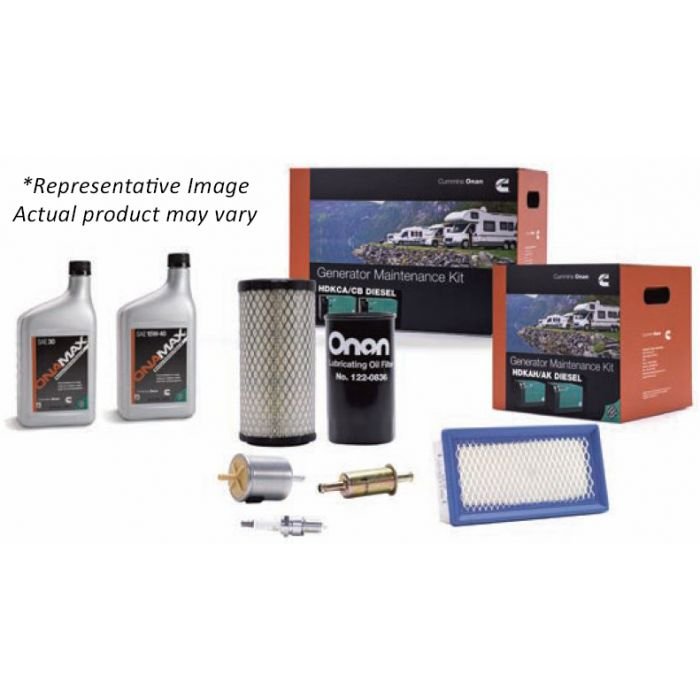
Let's look at a common example, like the maintenance kit for the Onan HDKCA, HDKCB, HDKCC, & HDKCD Quiet Diesel models. Such a kit is designed to provide everything you need for a standard service interval, often including:
- ONAMAX Oil (e.g., PT# 326-5336): This isn't just any oil; ONAMAX oil is specifically formulated to meet the demands of your Onan generator's engine. It provides superior lubrication, protects against wear, and maintains performance across various operating temperatures. The quantity included (often 6 quarts) is typically sufficient for a complete oil change.
- Air Filter (e.g., PT# 140-3071): Your generator's engine needs clean air to combust fuel efficiently. The air filter acts as the lungs, preventing dust, dirt, and debris from entering the engine. A clogged air filter starves the engine of air, leading to reduced power, increased fuel consumption, and potential engine damage.
- Oil Filter (e.g., PT# 122-0893): As oil circulates through your engine, it picks up contaminants and metal particles. The oil filter traps these impurities, ensuring that only clean oil lubricates vital moving parts. A fresh oil filter is crucial for the longevity of your engine, working in tandem with new oil to protect against wear.
- Fuel Filter (e.g., PT# 149-2513): Clean fuel is paramount for efficient combustion and to prevent damage to sensitive fuel system components like the fuel pump and injectors. The fuel filter removes sediment, rust, and other contaminants from the fuel before it reaches the engine. A dirty fuel filter can cause rough running, loss of power, and even prevent the generator from starting.
While these four components are the backbone of most Onan maintenance kits, some kits or service schedules might require additional items like: - Spark Plugs: For gasoline-powered Onan generators, spark plugs ignite the fuel-air mixture. They need periodic inspection and replacement to ensure reliable starting and efficient combustion.
- Drive Belts: Some Onan models, particularly larger ones, use drive belts for components like the cooling fan or alternator. These belts can fray or crack over time and require inspection and replacement.
- Coolant: For liquid-cooled generators, maintaining the proper level and condition of the coolant is vital for temperature regulation and preventing overheating.
- Anodes/Zinc Rods: For marine generators, these sacrificial anodes protect metal components from corrosive galvanic action in saltwater environments.
When it's time to stock up on these critical items, remember you can always Shop Onan generator parts directly from authorized dealers or reputable suppliers who specialize in genuine Cummins Onan products. This ensures you’re getting the right part for your specific model every time.
Finding Your Perfect Onan Maintenance Kit
With numerous Onan generator models out there, how do you ensure you get the right maintenance kit? It boils down to one crucial piece of information: your generator's model number.
Every Onan generator has a unique model number, usually found on a data plate attached to the unit. This plate often includes the model, spec, and serial number. The model and spec numbers are critical for identifying the correct maintenance kit. For instance, a kit explicitly designed for a "HDKCA, HDKCB, HDKCC, & HDKCD Quiet Diesel" model won't perfectly fit a gasoline-powered RV generator.
Here's how to ensure you get the right kit:
- Locate Your Generator's Data Plate: This is usually on the side, front, or top of the generator, often near the control panel or exhaust.
- Note the Model and Spec Number: Write these down accurately.
- Consult Your Owner's Manual: Your generator's manual will specify the recommended maintenance schedule and often list the correct part numbers for filters and fluids.
- Use Authorized Onan Resources: When browsing online or speaking with a supplier, use your model and spec number to search for the appropriate maintenance kit. Reputable sites and dealers will have cross-referencing tools to guide you.
- Look for Kit Contents: Always double-check the description of the kit to ensure it contains the specific oil and filter part numbers recommended for your generator.
Don't guess. A few minutes of verification can save you hours of frustration and potential damage from using incorrect parts.
Your Onan Maintenance Checklist: A Step-by-Step Guide
Performing routine maintenance on your Onan generator isn't overly complicated, but it requires attention to detail and adherence to safety protocols. Your generator's owner's manual is your ultimate guide, as specific procedures and torque settings can vary by model. Always refer to it first.
Before you begin, gather your tools:
- The appropriate Onan maintenance kit
- Wrenches (for filter removal)
- Oil drain pan
- Funnel
- Rags or shop towels
- Gloves
- Eye protection
Here's a general checklist for a typical service, often recommended at specific run hour intervals (e.g., every 150-200 hours) or annually, whichever comes first:
1. Safety First, Always
- Disconnect Power: Ensure the generator is completely off and cool. Remove the negative battery cable to prevent accidental starts.
- Ventilation: If working indoors or in an enclosed space, ensure adequate ventilation.
- Personal Protective Equipment (PPE): Wear gloves and eye protection.
2. Change the Engine Oil and Oil Filter
This is arguably the most critical and frequent maintenance task.
- Warm Up (Optional but Recommended): Running the generator for 10-15 minutes before draining the oil helps warm it up, making the oil flow more easily and carry out more contaminants. Be sure to let it cool slightly before working on it to avoid burns.
- Drain Old Oil: Place your oil drain pan directly beneath the oil drain plug. Remove the plug and allow all the old oil to drain completely.
- Replace Oil Filter: Once the oil has drained, remove the old oil filter using a filter wrench. Apply a thin coat of new oil to the rubber gasket of the new oil filter. Screw it on by hand until snug, then give it another quarter to half-turn (consult your manual for exact torque).
- Replace Drain Plug: Reinstall the oil drain plug, ensuring it's tightened to the manufacturer's specification.
- Refill with New Oil: Using a funnel, slowly add the recommended amount of fresh ONAMAX oil. Check the dipstick frequently, adding small amounts until the oil level is within the "full" marks. Do not overfill.
- Run and Recheck: Briefly run the generator for a few minutes to circulate the oil, then shut it off and recheck the oil level. Top off if necessary. Look for any leaks around the filter or drain plug.
3. Replace the Air Filter
- Locate and Remove: Identify the air filter housing. Unclip or unscrew the cover and carefully remove the old air filter.
- Clean Housing: Wipe out any dust or debris from inside the air filter housing.
- Install New Filter: Insert the new air filter, ensuring it's seated correctly. Replace the cover and secure it.
4. Replace the Fuel Filter
This step is crucial for fuel system health.
- Locate Fuel Filter: Find your generator's fuel filter. It's usually an inline filter between the fuel tank and the engine.
- Prepare for Spills: Have rags ready, as some fuel will spill. You might also need to pinch off fuel lines if your generator doesn't have a fuel shut-off valve.
- Remove and Install: Carefully disconnect the fuel lines from the old filter and remove it. Install the new fuel filter, paying close attention to the flow direction (usually indicated by an arrow on the filter). Reconnect the fuel lines securely.
- Prime the Fuel System: After replacing the fuel filter, you must prime the fuel system to remove any air introduced. Consult your manual for the exact priming procedure, which often involves repeatedly cycling the start switch (without starting the engine) to activate the fuel pump. Listen for the pump working, then attempt to start the generator. It may take a few tries.
5. Inspect and Replace Spark Plugs (Gasoline Models)
- Remove Spark Plug Wires: Carefully pull the spark plug wires from the plugs.
- Remove Old Plugs: Use a spark plug socket to remove the old plugs. Inspect them for fouling, wear, or damage.
- Gap New Plugs: If required, set the gap on the new spark plugs according to your manual's specifications (a spark plug gapper tool is inexpensive and essential).
- Install New Plugs: Hand-thread the new plugs to avoid cross-threading, then tighten them to the specified torque. Reconnect the spark plug wires.
6. Check Other Consumables and Components
- Coolant Level (Liquid-Cooled Models): Check the coolant reservoir and top off with the correct type of coolant if low.
- Battery: Inspect battery terminals for corrosion and clean if necessary. Ensure connections are tight. Check battery voltage and charge if needed.
- Drive Belts: Inspect belts for cracks, fraying, or excessive wear. Check tension according to the manual.
- Exhaust System: Look for any signs of leaks or damage.
- General Inspection: Check hoses for cracks, loose wires, and general cleanliness.
7. Document Your Maintenance
Keep a log of all maintenance performed, including dates, run hours, and parts replaced. This helps you track service intervals and provides a valuable record.
By following these steps and relying on your Onan maintenance kit, you're investing directly in your generator's reliability and extending its operational life.
The Cost of Neglect vs. The Value of Vigilance
It’s easy to look at the price of an Onan maintenance kit and see it as an expense. But consider the alternative: the cost of neglect.
A neglected generator is a ticking time bomb. What starts as a simple, inexpensive filter can escalate into:
- Engine Damage: A clogged air filter can starve the engine, causing it to run hot and wear prematurely. A dirty oil filter means abrasive particles are grinding away at internal components. Both can lead to catastrophic engine failure requiring a complete overhaul or replacement – a bill that could easily run into thousands of dollars.
- Downtime and Disruption: A generator failure during a critical moment isn't just an inconvenience; it can be dangerous. Whether it's losing power to essential medical equipment or having your RV trip cut short, the disruption is immeasurable.
- Reduced Efficiency: Clogged filters and old oil force your generator to work harder, consuming more fuel and delivering less power. This translates directly to higher operating costs over time.
- Voided Warranties: Using non-genuine parts or failing to adhere to the recommended maintenance schedule can void your Onan warranty, leaving you fully exposed to repair costs.
In contrast, the value of vigilance is immeasurable. A maintenance kit is a small, proactive investment that yields massive returns: - Reliable Performance: Knowing your generator will start and run when you need it most.
- Extended Lifespan: Regular care means your Onan will serve you faithfully for many years.
- Optimal Efficiency: Clean filters and fresh oil ensure your generator runs at peak performance, maximizing fuel economy.
- Peace of Mind: The confidence that comes from knowing you’re prepared for any power outage or off-grid adventure.
- Preserved Warranty: Using genuine parts and following the maintenance schedule keeps your warranty intact.
Think of it this way: an Onan maintenance kit isn't an expense; it's an insurance policy, safeguarding your investment and your power supply.
Common Questions About Onan Generator Maintenance
Even with comprehensive guides, questions pop up. Here are some of the most common inquiries about Onan generator maintenance:
"Can I use generic oil or filters in my Onan generator?"
While tempting due to lower upfront cost, using generic or "will-fit" parts is a significant risk. Genuine Cummins Green Label Parts™ are engineered specifically for your Onan generator, meeting precise specifications for flow, filtration efficiency, and material compatibility. Generic parts may not filter as effectively, can degrade faster, or even cause system damage, potentially voiding your warranty. For optimal performance and longevity, always stick to genuine Onan/Cummins parts, including ONAMAX oil.
"How often should I change my Onan generator's oil and filters?"
The precise interval depends on your specific Onan model and how it's used. Most Onan generators recommend oil and filter changes every 150-200 hours of operation or annually, whichever comes first. Even if you rarely use your generator, oil degrades over time due to exposure to air and temperature fluctuations. Always consult your owner's manual for the exact recommended schedule for your unit.
"What if I rarely use my generator? Does it still need maintenance?"
Absolutely. Time-based maintenance is just as crucial as hour-based maintenance. Even a generator that sits idle can suffer from fuel degradation, battery discharge, oil breakdown, and dried-out seals. Performing annual maintenance, regardless of run hours, ensures that fluids are fresh, filters are clean, and components are ready when you eventually need them. Regularly "exercising" your generator (running it for an hour or two under a moderate load monthly) also helps keep everything lubricated and prevents fuel system issues.
"Where can I find my Onan generator's model number?"
Your generator's model number is typically located on a data plate attached to the unit. This plate is usually metal and can be found on the side, front, or top of the generator, often near the control panel or exhaust. It will list the model number, spec number, and serial number. This information is vital for ordering the correct maintenance kit and other parts.
"Is it hard to change the fuel filter?"
Changing the fuel filter can be a bit trickier than changing the oil or air filter, primarily because you need to deal with fuel lines and then properly prime the fuel system afterward. Spills are common, so be prepared with rags. The most critical step is priming the fuel system to remove air; otherwise, the generator won't start or will run poorly. Always refer to your owner's manual for the exact priming procedure, which usually involves cycling the start switch repeatedly without starting the engine to engage the fuel pump.
Beyond the Kit: Pro Tips for Onan Longevity
While regular use of Essential Onan Generator Maintenance Kits & Consumables is fundamental, a few additional habits can significantly boost your generator's lifespan and reliability.
- Exercise Your Generator Regularly: This is perhaps the most overlooked tip. Run your Onan generator for at least an hour once a month, preferably under a moderate load (e.g., turning on your RV's AC unit). This lubricates seals and moving parts, prevents fuel from gumming up the carburetor (in gasoline models), and ensures the generator is ready when you need it most.
- Keep it Clean: Dust, dirt, and debris can clog cooling fins and air intakes, leading to overheating. Periodically clean the exterior of your generator, ensuring that cooling vents are free of obstructions. For marine applications, regular freshwater rinses are essential to combat salt corrosion.
- Fuel Quality Matters: Use fresh, high-quality fuel. If your generator sits for extended periods, consider using a fuel stabilizer to prevent fuel degradation and gumming, especially for gasoline models. Diesel models can benefit from diesel fuel additives to prevent gelling in cold weather and to keep injectors clean.
- Monitor Your Battery: Your generator's starting battery is crucial. Ensure terminals are clean and tight, and keep the battery charged. If your generator has an automatic transfer switch, it should keep the battery charged, but periodic manual checks are still wise.
- Listen to Your Generator: Pay attention to any unusual noises, vibrations, or changes in performance. A new sound can be an early indicator of a problem, allowing you to address it before it becomes serious.
- Store Properly: If your generator is stored for an extended period, follow the "long-term storage" instructions in your owner's manual, which may include draining fuel or adding stabilizer, and ensuring the battery is maintained.
Keeping the Power On, Always
Your Onan generator is an investment in reliable power, and safeguarding that investment is simpler than you might think. By understanding the critical role of Essential Onan Generator Maintenance Kits & Consumables, committing to regular service intervals, and always opting for genuine parts, you're not just performing upkeep—you're ensuring consistent performance, extending the life of your equipment, and securing your peace of mind.
Don't wait for a breakdown to realize the importance of proactive care. Get familiar with your generator's needs, keep a maintenance kit on hand, and make routine service a priority. Your Onan will repay you with years of dependable, uninterrupted power, wherever and whenever you need it most.